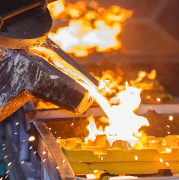
Today I had to come prepared with steel toed shoes as I would be touring the vast number of mill buildings at Carpenter. I didn’t have many expectations for that the mill would be like, I pictured it as I had seen in an occasional movie here and there: dark and scary. The way movies portray steel mills isn’t too far off from how they are in reality; my first impression of the mill was that this is what nightmares were made of. There was 45 ton containers of molten hot steal, smoke and flames flying up from the containers to keep the steel in a molten form, and large metal containers moving from large tracks in the ceiling.

Before I get sidetracked into how intimidating its initial impression was, I should add that I was fully equipped with safety equipment. The steel toed shoes were a necessity (thank you Walmart) as were ear plugs, a hard hat, and a mill jacket made of a special material. Then men in the mill that got closer to the incredibly hot steel wore silver suits that I assume reflected the heat. I have a lot of appreciation for the men in the mill, they don’t have the luxury of air conditioning and work through many safety risks everyday. I was in the mill for only about two hours and felt like I was going to pass out due to the immense heat.

The mill tour was given by a retired steel worker; he said when he retired he didn’t know what to do with all the time on his hands, so now he gives tours about once a week to customers, interns, or new employees of Carpenter. On my tour there was an intern from Penn State and a woman of the Carpenter facility in England.
My favorite part of the mill tour was the coil manufacturing. It started as a red hot malleable steel bar, and a man controlled a machine to make the rod thin enough to enter the first machine. There must have been a total of 50+ machines that made the steel thinner and longer before in reached the end, still with a red glow. It was fascinating and I couldn’t begin to wrap my head around the functions of each individual machine.
Overall I believe the mill tour was important to see the manual labor involved in carrying the new products designed by research and development.
 Applications of Alloys